

Reviving the Buckingham Canal: Restoring a forgotten lifeline of the Coromandel Coast
A neglected 19th-century waterway holds the key to sustainable transport, disaster mitigation, and regional livelihoods
Reviving the Buckingham Canal: Restoring a forgotten lifeline of the Coromandel Coast
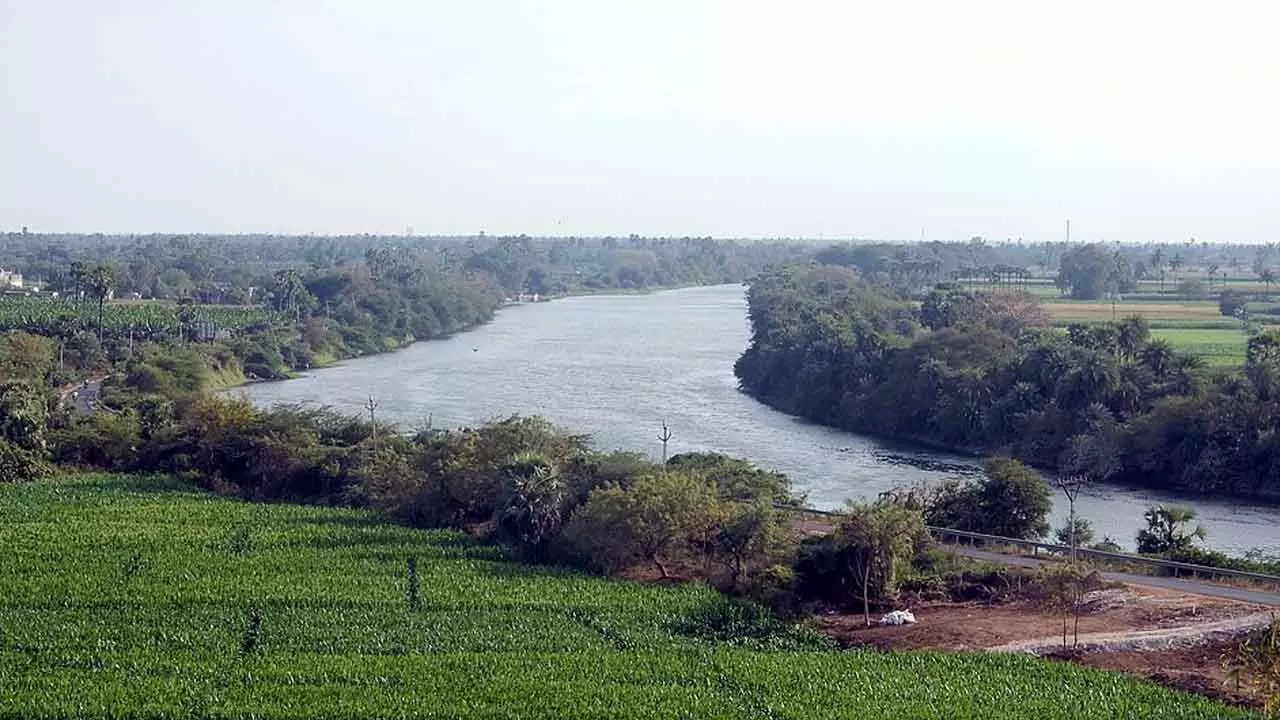

The rapid transformation of human civilisation accelerated manifold with the invention and expansion of modern modes of transportation. In India too, beginning with the colonial period and continuing after Independence, sustained efforts have been made to improve transportation networks connecting the length and breadth of the subcontinent. Today, governments are investing heavily in road networks, highways, bullet trains, and national and international air connectivity.
However, the ease and speed of these modes of transport have overshadowed waterways, which once played a vital role in the economy by facilitating the movement of goods, services, and people across regions. As a result of this transformation, coupled with rapid urbanisation, encroachment of water bodies, and pollution, several historic water canals in India have been neglected and have fallen victim to modernisation.
It is the responsibility of the government to promote inland waterways through the revival of these canals. One such canal whose plight calls for immediate attention and action is the Buckingham Canal.
Designed by Western engineers, this 19th-century navigation canal runs parallel to the Coromandel Coast, connecting the present-day states of Andhra Pradesh and Tamil Nadu. The construction of the Buckingham Canal took place in several phases and was initially conceived as a private waterway, planned and executed under the Design–Build–Operate project delivery system—the predecessor of today’s much-acclaimed Build–Own–Operate–Transfer model. This model is the predecessor of the present day much-acclaimed Build-Own-Operate-Transfer model.
Construction began in 1806, with a 16.5-kilometre stretch from Madras Port to Ennore built by the Basil Cochrane Company. In recognition of this contribution, the canal was initially named the Cochrane Canal. Later, the British government extended it northwards and linked it with Kakinada Port via Vijayawada, enabling continuous navigation between Madras and Kakinada.
For a period, it was also referred to as Lord Clive’s Canal. During the Great Famine of 1876–78, canal extension works were undertaken as part of famine relief measures. Eventually, the canal was renamed the Buckingham Canal, after the Duke of Buckingham and Chandos, then Governor of the Madras Presidency.
Stretching nearly 796 kilometres parallel to the Coromandel Coast, about one kilometre inland, the canal extends up to Villupuram in Tamil Nadu.
It connects with Pulicat Lake and, within Chennai, intersects the city’s three major rivers: the Kosasthalaiyar, Cooum, and Adyar. These features make the Buckingham Canal a remarkable engineering achievement and a multipurpose infrastructure project.
Initially, the canal was used extensively for transporting commodities and people, and later supported fishing activities. Settlements emerged along its banks, and several communities came to depend on it for their livelihoods. In History of the Buckingham Canal Project (1898), A.S. Russell observed that the canal placed the erstwhile Madras Presidency “in cheap and easy communication with no less than five districts, and with the large and important towns of Cocanada, Bezwada, Masulipatam, Ongole and Nellore.”
He further noted that regions once considered “a dreary waste of sand” witnessed agricultural expansion, improved drainage of low-lying lands, the development of casuarina plantations, and a significant rise in the wealth and prosperity of the population.
Beyond economic benefits, the canal has demonstrated its potential as a natural defence against disasters such as floods and tsunamis. During the 2004 tsunami, the canal acted as a buffer along nearly 310 kilometres of coastline from Pedaganjam in Prakasam district to Chennai, saving hundreds of lives in fishing communities and coastal villages. Scientists believe the canal can serve as a barrier, allowing tidal waves to dissipate into the ocean within minutes.
Despite its historic significance and proven utility, the Buckingham Canal today faces severe degradation. Untreated industrial and urban waste is discharged into its waters, large stretches have been encroached upon, siltation has reduced its depth, and natural disasters have caused structural damage. Mega prawn farms along the canal banks often dump diseased and dead stock directly into the waterway.
Ironically, cyclones, against which the canal once served as a protective buffer, have damaged it, while reconstruction and maintenance efforts remain minimal. In several locations, the canal is clogged with debris or disappears entirely, re-emerging only after long stretches.
The urgent need is the immediate restoration of this historic canal. Governments routinely release millions of rupees as disaster relief after floods and cyclones, yet proactive investment in mitigation infrastructure could significantly reduce loss of life and property.
The Buckingham Canal presents such an opportunity, while also supporting livelihoods for communities along its route. Medium- and long-term restoration plans should be prioritised by the governments of Andhra Pradesh and Tamil Nadu, in coordination with the Union government.
A measure of hope has emerged with the Inland Waterways Authority of India (IWAI) declaring the Buckingham Canal part of National Waterway–4 (NW-4). Established in 1986, IWAI is tasked with developing and maintaining inland water transport on national waterways. NW-4 covers the stretch from Kakinada to Kalapet in Puducherry, planned in three phases.
However, progress has been slow, with survey work for Phase 1 shifted to later phases, jeopardising the project’s momentum. Despite its ambition, implementation has been sluggish, and there is an urgent need to reorder priorities and accelerate work, particularly with strong involvement from State Water Resources Departments.
Reviving the Buckingham Canal demands a concrete and time-bound action plan. This includes dredging, removal or redesign of obstructive bridges, recovery of encroached land, reconstruction of canal walls where necessary, and strict regulation of pollutants and untreated waste.
Rejuvenation of this multipurpose canal would enable environment-friendly transport of goods and passengers, reduce road traffic congestion, support irrigation, revive fisheries and boating, and generate livelihoods for millions. Importantly, it also offers an opportunity for Andhra Pradesh and Tamil Nadu to collaborate in protecting and benefitting from a shared national heritage. With sustained political will and coordinated action, the Buckingham Canal can once again become a vibrant artery of economic and ecological life.
(The writer is a retired IAS officer)





